Anthropic's Q1 2026 Strategy: Building AI That Can Act—Without Losing Control
There is a moment, when you work with Claude regularly, where you notice something that is hard to name at first. It does not just answer. It pushes back. It flags uncertainty. It occasionally declines to proceed without checking.
That is not a limitation. That is a design decision. And once you see it, the whole of Anthropic's Q1 2026 strategy becomes readable.
Anthropic is not moving slower than its competitors. It is moving deliberately. And it is building something that neither Google nor OpenAI is building: an AI system that can act, but is designed not to overstep.
A Consistent Design Philosophy Across the Quarter
Unlike companies that operate in visible phases, Anthropic's Q1 developments follow a consistent internal logic rather than a staged rollout.
In January, the focus was on behavior. Anthropic expanded and refined how Claude is guided, through updates to its underlying framework and governance structures. At the same time, it introduced tools that position Claude not as a standalone assistant but as part of a broader workflow environment. The emphasis was not on what Claude could do, but on how it was supposed to behave while doing it.
In February, capability increased. New iterations of Claude improved reasoning, coding, and problem-solving. But these improvements were not released in isolation. They came alongside updates to safety frameworks and scaling policies. Greater capability did not arrive without additional control.
In March, the direction became explicit. Claude moved into action — the ability to interact with software environments, execute multi-step workflows, operate with increasing autonomy. And still, the pattern held.
Capability increases. Control increases with it.
Claude Is Becoming a Controlled Agentic System
This is the key shift in Anthropic's strategy.
Claude is no longer just an AI that responds. It is becoming a system that can act. It can navigate tools, manage workflows, carry context across tasks. But unlike other approaches to agentic AI, this autonomy is not open-ended.
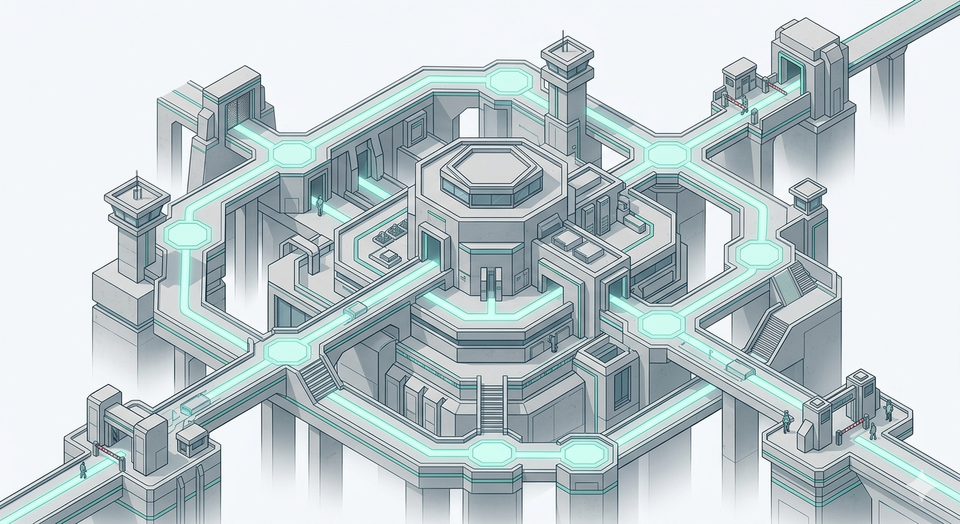
Anthropic is designing a system where actions are bounded. Decisions are guided. Risk is managed within the architecture itself — not added on top of it afterward.
This distinction matters more than it might appear. Safety features bolted onto a capable system behave differently from safety thinking baked into how the system is built. One is a constraint. The other is a characteristic.
Governance Is Part of the Product
One of the most distinctive aspects of Anthropic's strategy is that governance is not treated as a compliance layer. It is part of the product.
Updates to responsible scaling policies, refinements to Claude's behavioral framework, tools that monitor and constrain actions in workflows — all of it points in the same direction. The system is designed to understand not just what it can do, but what it should do, and when to stop.
This creates a different kind of AI experience. Instead of maximizing output at all costs, the system prioritizes reliability and alignment with user intent. The output may sometimes be less than you could theoretically extract. The behavior is more predictable than you would otherwise get.
For some use cases, that trade-off is exactly right.
From Context to Reasoning
Another important element is how Claude handles continuity.
Anthropic is not primarily focused on connecting AI to your calendar, your inbox, your files. The emphasis is different: continuity of reasoning. The system tracks what you are trying to achieve, not just what you have asked.
Where other systems optimize for personalization — knowing who you are and what you usually do — Anthropic optimizes for coherence. The goal is to maintain a consistent line of thought across tasks and interactions, to follow an argument rather than anticipate a preference.
That positions Claude less as a personalized assistant and more as a thinking partner. I notice this most clearly in longer working sessions — drafting a complex article, building out a structured argument, working through a decision with multiple trade-offs. Claude holds the thread in a way that feels different from tools optimised for fast, discrete answers. It does not just retrieve what was said earlier. It tracks where the thinking is going.
Agentic AI, But With Boundaries
By March, Anthropic's direction is unmistakable.
Claude is capable of performing actions within software environments. It can execute workflows, coordinate tasks, operate with increasing independence. But every step toward autonomy is paired with constraint. The system can act, and it is designed to pause when uncertainty increases, to flag when risk is detected, to operate within limits that are defined in advance rather than discovered after the fact.
This is Anthropic's answer to one of the central challenges of modern AI: how to enable action without losing control. It is a harder problem to solve than simply expanding capability. And it is one that becomes more valuable as the capability continues to grow.
The Strategic Implication
When you take Q1 2026 as a whole, Anthropic's strategy becomes clear.
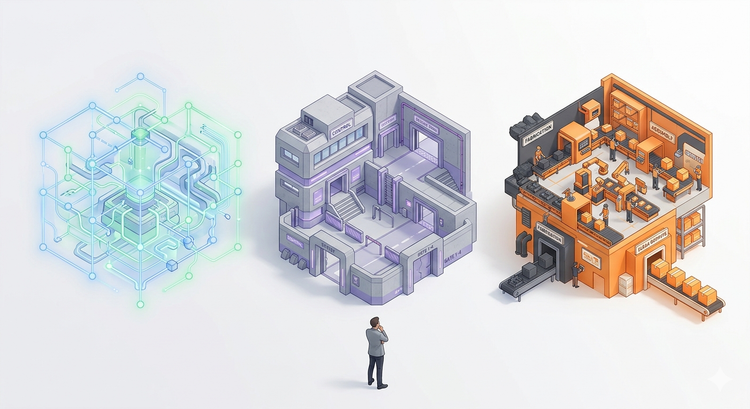
It is not trying to win through ecosystem integration. It is not trying to dominate distribution. It is not even trying to maximize raw capability as fast as possible. It is trying to define the architecture of controlled autonomy, and to make that architecture the competitive advantage.
That is a different kind of bet. It pays off not when AI is impressive, but when AI is trusted enough to be given real responsibility.
Where Google's strategy rewards staying inside its ecosystem, Anthropic's strategy rewards staying in the loop. The system is designed to keep you there. Not by limiting what it can do, but by making the boundaries visible. That is a different relationship between user and system. And it sets up a sharp contrast with what OpenAI is building.
This is the third article in a five-part series on where Google, Anthropic, and OpenAI are actually heading in 2026 — and what it means for how you work. The first article, the introduction to this series, is The AI Shift No One Is Explaining: Why Q1 2026 Changed Everything.