OpenAI's Q1 2026 Strategy: Turning AI Into Work Infrastructure


Ask most people which AI tool they think of first, and they will say ChatGPT. That is not an accident. It is the result of a sustained, deliberate strategy. In Q1 2026, that strategy became more explicit than it has ever been.
OpenAI is not primarily competing on model quality anymore. It is competing on where work happens. And increasingly, it is engineering ChatGPT to be the answer to that question.
A Structured Shift Across the Quarter
The key to understanding OpenAI's direction lies in how its Q1 developments build on each other.
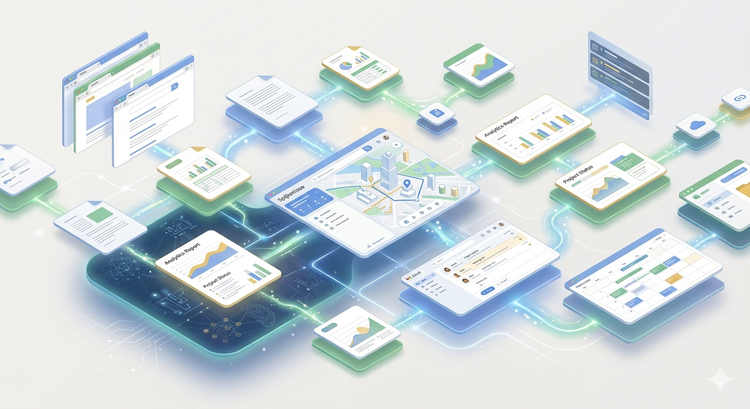
In January, the focus was on interface. ChatGPT evolved further into a central workspace — a place where users could generate documents, analyze data, and manage multi-step tasks without leaving the environment. The interaction model began to resemble a workflow system more than a conversational tool.
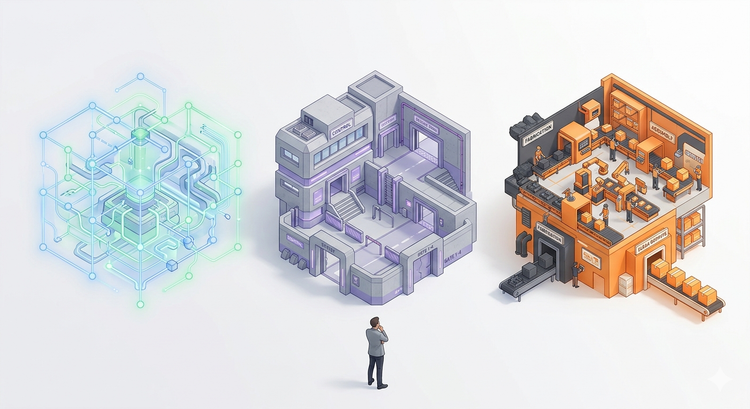
In February, the emphasis moved to architecture. OpenAI introduced a layered model approach, pairing high-capability models with smaller, more efficient variants. Different models for different types of work: complex reasoning at one level, high-volume execution at another. The system began to resemble cloud infrastructure more than a single application.
In March, the strategy became explicit. With the positioning of GPT-5.4, the focus shifted to output, structured, professional, immediately usable. Documents. Reports. Analyses. Results that fit directly into real workflows without requiring significant rework.
These are not separate moves. They form a single coordinated direction.
ChatGPT Is Becoming the Work Interface
At the center of this strategy is ChatGPT itself.
It is no longer primarily a place to ask questions. It is becoming the interface through which work is performed. Tasks that once required moving between multiple tools — writing, structuring, analyzing, formatting — are increasingly consolidated into one environment.
That reduces friction between stages of work. Instead of translating an idea across three different applications before it becomes a usable output, users can remain within a single system that handles the full process. The interface becomes less about conversation and more about execution.
This is a significant repositioning. And it is one that compounds over time: the more work happens inside ChatGPT, the more central it becomes to how that work is structured.
A Layered Model Architecture
Behind the interface, OpenAI is building a layered model system that functions more like infrastructure than a product.
High-capability models handle complex reasoning and structured tasks. Smaller models handle speed, repetition, and scale. Together, they form an architecture where different types of work are routed to different levels of capability. Making the system more efficient and more adaptable without relying on a single monolithic model for everything.
This is how cloud platforms are built, not how software applications traditionally work. The parallel is deliberate.
From Assistance to Production
The most important shift, however, is in what the system is optimized to deliver.
With models like GPT-5.4, the focus is no longer on generating plausible responses. It is on producing usable results. Structured documents. Data analyses. Operational content. Outputs that require minimal transformation before they can be used directly in a workflow.
The distance between prompt and deliverable is shrinking. That changes the role of the person using the system. You are no longer primarily a writer or analyst who uses AI to assist. You become a director. Someone who shapes and approves what the system produces, rather than producing it yourself.
That shift is efficient. It also means the system begins to influence how work is shaped, not just how fast it gets done.
Codex and the Execution Layer
Another important element in this strategy is the continued investment in coding and development tools.
Through Codex and related capabilities, OpenAI is strengthening the ability to operate within real environments. Code is not just generated — it is tested, refined, and integrated into workflows. The system does not stop at producing content. It begins to interact with the systems where that content is used.
This moves AI closer to action in a way that is practical and immediate. It is less about autonomous behavior and more about closing the gap between generating something and deploying it.
Standardization Through Output
There is a broader implication to this approach that is worth naming directly.
By optimizing for structured, usable output, OpenAI is implicitly defining what good work looks like. The formats, structures, and patterns the system produces become defaults. Over time, work produced within the same system begins to converge, not because users choose it, but because the system is optimized for it.
I notice this when I use ChatGPT for tasks that have a clear deliverable — a structured summary, a formatted outline, a draft that needs to be immediately usable. The speed is real. So is something else: the output has a recognizable shape. Not wrong, not generic in any obvious way, but consistent in a manner that is difficult to pin down until you have seen enough of it. The system is optimized for a certain kind of result, and that optimization is visible in what it produces.
For creators and knowledge workers, that is the most important trade-off to understand. Recognizing the pull is the first step to deciding when to follow it and when to resist it.
The Strategic Implication
When you take Q1 2026 as a whole, OpenAI's strategy is clear.
It is not trying to win through ecosystem depth like Google, or through governance as a differentiator like Anthropic. It is building something more direct: AI as a production layer for work. An interface where work is initiated, a model architecture where work is processed, and an output layer where work is delivered. All within a unified system designed to minimize the distance between idea and result.
Where Google keeps you inside its ecosystem and Anthropic keeps you in the loop, OpenAI is optimizing for something different: keeping you moving. The friction between thinking and producing shrinks to almost nothing. That is the most immediately compelling of the three strategies, and the one that raises the sharpest questions about what happens to the work itself. Those questions are what the final article addresses.
This is the fourth article in a five-part series on where Google, Anthropic, and OpenAI are actually heading in 2026 — and what it means for how you work. The first article, the introduction to this series, is The AI Shift No One Is Explaining: Why Q1 2026 Changed Everything.